Gardeners Euston Road top tips for tiny terrace gardens
Tiny terrace gardens can feel awkward at first glance. A narrow plot, a bit of shade, a hard surface that takes up too much room, and suddenly you are trying to fit relaxation, storage, planting and privacy into a space the size of a train carriage. Still, with the right approach, even a compact London terrace can become one of the nicest places in the home. These Gardeners Euston Road top tips for tiny terrace gardens are built around real-life constraints: limited width, overlooked boundaries, changeable light, and the simple fact that most people want a garden that looks good without becoming a second job.
Whether you want a low-maintenance courtyard feel, a small productive space for herbs and salad leaves, or a greener outdoor room for morning coffee, the trick is to design with intention. Not every solution works in a tiny terrace, and that is fine. The best gardens are usually the ones that make a few smart decisions and stick to them. Let's face it, cramming in everything at once tends to look messy by week three.
In this guide, you will find practical advice on layout, planting, containers, lighting, privacy, maintenance and common mistakes to avoid. You will also see when it makes sense to bring in a professional, and how services such as garden services overview, pricing and quotes, and the company's recycling and sustainability approach can support a safer, cleaner result.
Table of Contents
- Why tiny terrace gardening matters
- How the approach works in practice
- Key benefits and practical advantages
- Who this is for and when it makes sense
- Step-by-step guidance
- Expert tips for better results
- Common mistakes to avoid
- Tools, resources and recommendations
- Law, compliance, standards, or best practice
- Options, methods, or comparison table
- Case study or real-world example
- Practical checklist
- Conclusion
- Frequently asked questions
Why Gardeners Euston Road top tips for tiny terrace gardens Matters
A tiny terrace garden is not just a smaller version of a bigger garden. It behaves differently. Hard landscaping can dominate quickly, wind can be stronger between tall buildings, and a poor layout can make the whole space feel boxed in. That is why the right tips matter so much: they help you avoid wasting time, money and planting stock on ideas that look lovely in a magazine but fail in a narrow London setting.
In areas around Euston Road and similar central London streets, terrace gardens often face a mix of shade from neighbouring buildings, reflective heat from brick walls, and a constant battle for privacy. A successful design has to work with those conditions, not against them. That usually means fewer but better chosen plants, more vertical structure, and clear circulation so the garden feels easy to use.
There is also the emotional side. A well-planned terrace can soften the hard edges of city living. You step outside and hear a little rustle in the leaves, maybe catch the smell of herbs after rain, and the space changes the mood of the whole property. For many homeowners, that is the real value. Not perfection. Just a calmer place to be.
How Gardeners Euston Road top tips for tiny terrace gardens Works
The basic method is simple enough: reduce clutter, create structure, and use height intelligently. But the details matter. In a small terrace, every pot, trellis, seat and path has to earn its place. If something does not improve comfort, beauty or usability, it probably does not belong there.
Think in layers. A tiny terrace often works best when it has:
- Ground layer: containers, paving, or a small paved zone that keeps movement easy
- Mid layer: shrubs, grasses, perennials and herbs that add fullness without blocking the view
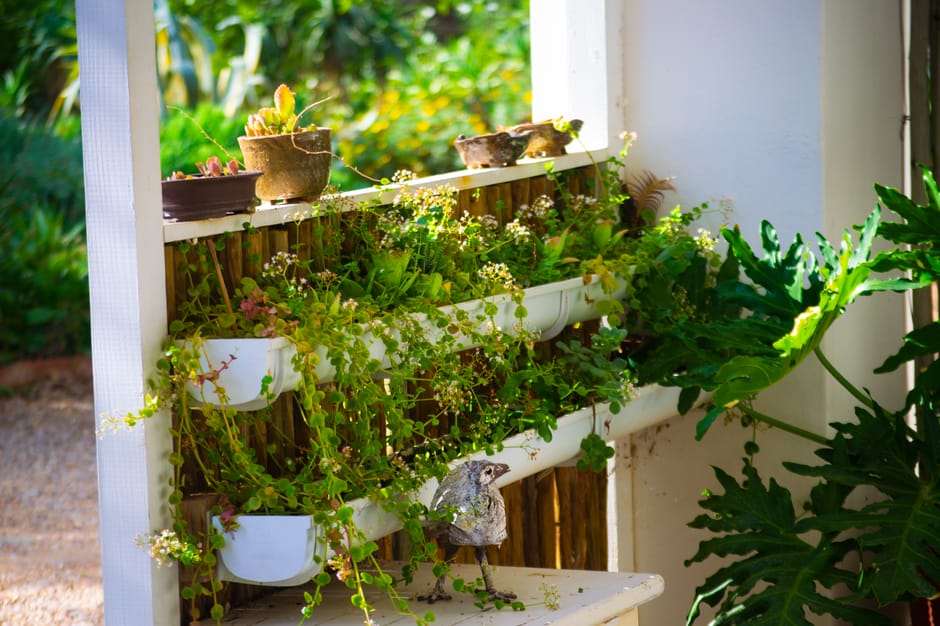
- Vertical layer: climbers, wall planters, trellis or narrow screens to draw the eye upward
That layered approach creates depth. And depth is what makes a small garden feel generous.
It also helps to design around behaviour. Ask yourself: do you want to eat outside, grow food, sit with a book, or just make the space nicer to look at from the kitchen? The answer changes the layout. A lot. A tiny terrace can become cramped if you try to make it all things at once. Choose the main use first, then shape the rest around it.
Professionals will often start by assessing light levels, access, drainage, and how much maintenance the owner can realistically manage. That sounds basic, but it saves endless frustration later. You may think a sunny corner is perfect for a Mediterranean-style display, until you notice it bakes by midday and dries out the soil in hours. Small gardens are funny like that.
Key Benefits and Practical Advantages
Done well, a tiny terrace garden gives you more than a prettier view. It can genuinely improve how the space works day to day.
- Better use of space: smart zoning makes a small area feel purposeful instead of crowded
- Lower maintenance: fewer plants, better mulching and clear access make upkeep manageable
- More privacy: vertical planting and screening can soften views from neighbouring windows
- Improved atmosphere: greenery reduces the hard, echoing feel of stone, brick and fencing
- More seasonal interest: careful plant choice keeps the garden attractive across the year
- Higher enjoyment: a terrace that feels organised gets used more often, simple as that
There is also a practical money-saving angle. A focused plan avoids overbuying plants, pots and decorative features that never quite fit. In our experience, many small gardens become expensive because people buy the wrong size containers or keep replacing plants that were never suited to the conditions.
A well-managed tiny terrace can also support sustainability goals. Smaller planting areas use less water than large borders, and thoughtful reuse of containers, composting and responsible waste handling all help. If you are interested in this side of things, the company's recycling and sustainability page is worth a look.
Who This Is For and When It Makes Sense
This approach is ideal for homeowners, tenants, landlords, and property managers who need a compact outdoor space to feel more inviting without turning it into a high-maintenance project. It is especially useful if you have a narrow rear terrace, a paved courtyard, a balcony-style garden, or a small split-level space with awkward corners.
It makes sense when you are dealing with one or more of these situations:
- You want a garden that looks neat from the house and is easy to keep tidy
- You have limited storage and cannot keep lots of bulky equipment outdoors
- You need screening from adjacent homes or shared access routes
- You want to introduce plants without losing all the usable floor area
- You are planning a refresh before letting, selling, or simply enjoying the property more
Sometimes the need is modest. Maybe you just want to stop the terrace feeling like a forgotten slab of paving. Fair enough. That is still a good reason to improve it. Not every project needs to be a grand redesign.
It is also worth saying that not every tiny terrace needs a full makeover. If the hard surfaces are sound and the structure is sensible, a targeted planting and styling project may be enough. That is often the smarter route.
Step-by-Step Guidance
Here is a practical way to approach a small terrace without getting overwhelmed.
1. Measure the space properly
Start with exact dimensions, including narrow points, steps, access doors, drain covers and any awkward protrusions. Tiny gardens punish guesswork. A planter that looks slim in your head can suddenly block half the walkway in real life.
2. Note sun, shade and wind
Observe the garden at different times of day. Morning light may be completely different from afternoon light, especially in central London where surrounding buildings shift the pattern dramatically. Some terraces are bright for only a few hours. Others stay cool and shaded for most of the day.
3. Decide on one main purpose
Do you want a sitting area, a planting showcase, or a productive herb and veg corner? You can combine functions, but one should lead the design. This keeps the garden from becoming a jumble of half-finished ideas.
4. Create a simple layout
Use one of these common patterns:
- Linear layout: best for very narrow terraces, with features arranged along the edges
- Corner focus: one seating or planting feature becomes the visual anchor
- Room-like layout: a small terrace is divided into zones with planters, screens or changes in surface
A linear layout often works best where width is limited. It keeps movement easy and stops the space from feeling choked.
5. Choose containers with discipline
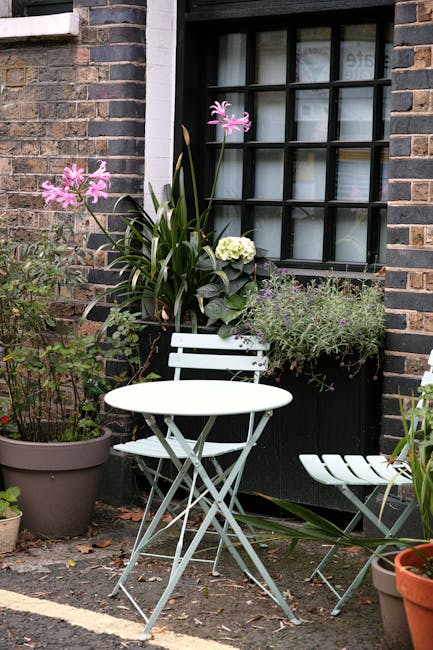
Containers should suit the scale of the terrace. Oversized pots can dominate, while tiny pots dry out too quickly. The sweet spot is usually a mix of a few medium and one or two larger containers. Larger pots hold moisture better and tend to be healthier for shrubs and perennials.
6. Build vertical interest
Use walls, fences and trellis work for climbers, slim shelves, or wall-mounted planters. Vertical planting pulls the eye upwards and makes a small space feel less compressed. It also helps if you want privacy without adding bulky screens.
7. Plant in layers and repeat shapes
Instead of buying lots of different plants, repeat a few well-chosen species. Repetition creates calm. Mixed with one or two taller anchor plants, it stops the terrace from looking busy in a bad way. Herbs, grasses, heuchera, ferns and compact shrubs can all work depending on the light.
8. Finish with easy access and storage
Leave room to water, prune and move around. A terrace that looks beautiful but is impossible to maintain will not stay beautiful for long. Small concealed storage, a narrow bench with space underneath, or a tidy wall hook system can make a surprising difference.
Expert Tips for Better Results
Here are the little decisions that often separate a decent terrace garden from one that feels genuinely well designed.
- Use fewer colours than you think. Two or three main planting colours usually feels calmer than a rainbow of competing tones.
- Choose one statement material. If the paving, pots or screen material is strong enough, you do not need much else shouting for attention.
- Keep the view through the garden open. Do not block the eye immediately at the entrance. Let it travel a little.
- Pick plants for containers, not just for looks. Root space, wind tolerance and watering needs matter more than a pretty label.
- Use fragrance carefully. A pot of lavender, thyme or jasmine near a seating spot can be lovely. Too much fragrance in a tiny area can feel overpowering, oddly enough.
- Mulch the surface of pots. It helps reduce evaporation and makes the garden look tidier. A small thing, but very useful.
- Think about the wet months too. A terrace that drains badly in winter becomes annoying quickly. Raised pots and suitable surface fall help.
One useful rule of thumb: if you are unsure whether to add another feature, probably don't. Tiny spaces gain more from editing than from adding. That sounds simple because it is.
Another expert habit is to create at least one calm focal point. It might be a single large pot, a small bench, or a climber trained neatly up the wall. That focal point gives the eye somewhere to rest, which is especially helpful when the surrounding area is visually busy.
Common Mistakes to Avoid
Tiny terrace gardens tend to fail for predictable reasons. Luckily, most of them are avoidable.
Overcrowding the space
This is the big one. It is tempting to fill every gap with a pot or ornament, but a cramped terrace quickly starts to feel messy. Leave breathing room. A little empty space is not wasted space.
Choosing plants without checking conditions
A plant might be gorgeous in the nursery and completely wrong for your terrace. Shade, wind, exposure and moisture levels all matter. If you ignore them, you end up replacing plants every few months, which nobody enjoys.
Using too many small pots
Too many small containers usually means more watering, more clutter, and less visual impact. Fewer larger containers often work better. They are easier to maintain too.
Forgetting the maintenance reality
A very elaborate planting scheme can be beautiful in May and exhausting by August. Be honest about how much time you want to spend outside with a watering can. If you only have ten minutes some mornings, design for that.
Ignoring privacy and sightlines
If neighbours can see straight into the terrace, the space may never feel relaxing. Screening can be soft and elegant, not heavy-handed. Climbers, slatted trellis or tall grasses can do the job without making the space feel boxed in.
Making the layout too rigid
Paths that are too tight, furniture that is too large, or features that are fixed in the wrong place can make a small garden awkward to live with. Flexibility matters. A foldable chair or moveable planter can be a better choice than a bulky permanent item.
Tools, Resources and Recommendations
You do not need a van full of equipment to improve a tiny terrace. In most cases, a modest set of good tools is enough. The key is choosing tools that support precision and tidy work.
| Tool or resource | What it helps with | Why it matters in a tiny terrace |
|---|---|---|
| Tape measure | Accurate layout planning | Prevents oversized pots or furniture from dominating the space |
| Quality secateurs | Pruning and shaping plants | Keeps narrow planting schemes neat and healthy |
| Watering can with a fine rose | Controlled watering | Better for containers and young plants than a blunt splash |
| Spare saucers or pot feet | Drainage management | Helps prevent waterlogging and staining on paved surfaces |
| Compost and mulch | Plant health and moisture retention | Reduces watering demands, which is a real win in summer |
| Professional planning support | Layout, planting and practical problem-solving | Useful if access, drainage or screening are tricky |
If you are considering help, start by looking at the available gardening services and then check the pricing and quotes information so you know what level of support fits your budget. If you need a clearer picture of the company background, the about us page and contact page are the natural next stops.
For jobs involving pruning at height, heavy pots, awkward access or waste removal, it is sensible to ask how the work will be handled. The company's health and safety policy and insurance and safety information are useful trust signals when deciding who to use.
Law, Compliance, Standards, or Best Practice
Most tiny terrace garden projects are straightforward, but there are still a few practical standards and best-practice points to keep in mind. This is not legal advice, just sensible working guidance.
If the property is rented, always check what you are allowed to change before installing fixed features, drilling into walls, or altering drainage. Landlords and managing agents may have their own rules about permanent modifications, shared access, and waste disposal. Better to ask first than have a tidy garden and an awkward conversation later.
For communal areas or shared terraces, good practice usually means keeping walkways clear, avoiding trip hazards, and making sure planters are stable. In a small space, a wobbling pot or a trailing hose can become a nuisance very quickly. Professional installers will normally plan around that.
Any work involving tools, lifting, or access in tighter areas should be done with care. Responsible contractors should be able to explain how they manage hazards, use equipment safely, and dispose of green waste properly. If sustainability matters to you, ask how clippings, soil and packaging are handled. That is one reason the recycling and sustainability page is relevant here.
It is also wise to review service terms before booking. The terms and conditions, payment and security information, and complaints procedure help set expectations clearly. Not glamorous reading, admittedly, but useful.
Options, Methods, or Comparison Table
There is no single right way to style a tiny terrace. The best method depends on what you want the space to do. Here is a simple comparison.
| Method | Best for | Pros | Watch out for |
|---|---|---|---|
| Container-only garden | Renters, flexible layouts, light touch updates | Easy to change, low commitment, suitable for awkward surfaces | Can look cluttered if pots are too small or too numerous |
| Vertical planting scheme | Very narrow terraces, privacy needs, visual impact | Saves floor space, adds height, improves screening | Needs secure fixing and ongoing pruning |
| Mini outdoor room | Homeowners wanting a seating and social area | Feels polished and purposeful, good for entertaining | Furniture can overwhelm a small footprint if chosen badly |
| Productive herb terrace | Cookers, keen growers, and people who want quick wins | Useful, fragrant, compact and easy to enjoy daily | Needs regular picking and decent light for best results |
| Mixed decorative scheme | People who want year-round interest and variety | Balanced look, more seasonal colour, richer texture | Needs careful editing to avoid visual overload |
If you are unsure which direction to take, the mixed decorative scheme is usually the safest starting point. From there, you can add one practical feature, like herbs or a compact seating corner, without committing to a full redesign on day one.
Case Study or Real-World Example
A typical tiny terrace challenge might look like this: a narrow paved garden behind a period property near Euston, with one sunny corner, a shaded boundary wall, and not much room to walk once a table and chairs are in place. The owner wants greenery, privacy and a place to sit, but also needs the space to be easy to manage through the year.
The solution in this kind of case is usually not dramatic. It is careful. First, the layout is simplified so the walking line stays open. Then one or two larger pots are used near the seating area, rather than lots of smaller ones scattered around. A slim trellis with climbers is added at the back wall to create height and soften the hard surfaces. Finally, herbs or compact perennial planting are grouped in a way that feels intentional rather than crowded.
The real shift often comes when the owner sees the space in the evening. A small light near the seating area, the shadow of leaves on brick, a little fragrance from thyme or jasmine, and suddenly the terrace feels like part of the home rather than a leftover space. Nothing magical, just a well thought through plan. And to be fair, that is usually enough.
In projects like this, professional support can be valuable if the garden needs better structure, safe clearance, or a complete tidy-through before planting. The job is often quicker and cleaner when handled with the right process and disposal plan.
Practical Checklist
Use this checklist before you start any tiny terrace garden update.
- Measure the full space, including access points and tight corners
- Check sun, shade, wind and drainage conditions
- Choose the garden's main purpose before buying anything
- Decide on a simple layout that keeps the terrace easy to move through
- Select a limited colour palette for pots and planting
- Use a mix of medium and larger containers rather than many small ones
- Add vertical interest with climbers, trellis or wall features
- Leave space for watering, pruning and general access
- Make sure any fixed features are suitable for your property type
- Plan how green waste and packaging will be removed or reused
- Check service details, terms and safety information if hiring help
- Book a quote if the project involves heavy lifting, awkward access or a full refresh
Expert summary: the best tiny terrace gardens are usually the ones that feel calm, not crowded. They rely on a few strong choices, not a dozen competing ones.
Conclusion
A small terrace garden can be one of the most rewarding outdoor spaces to improve. Because the footprint is limited, every good decision shows. A well-chosen plant, a tidy line of containers, a bit of vertical structure, or simply better flow through the space can transform the whole feel of the home.
The main thing to remember is that tiny does not mean restrictive. It just means selective. When you design with purpose, keep the maintenance realistic, and choose plants and features that genuinely fit the conditions, the result can be elegant, practical and surprisingly uplifting.
If you are still comparing your options or want support with layout, planting, clearance or a more polished finish, exploring the company's services overview and pricing and quotes pages is a sensible next step.
Get a free quote today and see how much you can save.
And if all you do this month is make one corner calmer, greener and easier to use, that is still a proper win. Small gardens grow on small wins.
Frequently Asked Questions
What are the best plants for a tiny terrace garden?
The best plants are usually compact, container-friendly and suited to your light conditions. Herbs, small evergreen shrubs, ornamental grasses, ferns, heuchera and some climbers often work well. The right answer depends on shade, wind and how much watering you are willing to do.
How do I make a small terrace garden look bigger?
Use a simple layout, fewer colours, vertical planting and a clear focal point. Avoid cluttering the floor with too many small items. Repeating a few plants or materials also helps the space feel calmer and more spacious.
Is a tiny terrace garden hard to maintain?
It can be, if it is overdesigned. A well-planned terrace is often easier to maintain than a larger garden because there is less ground to manage. The key is choosing the right plants and avoiding too many fiddly features.
Can I grow vegetables in a tiny terrace garden?
Yes, especially herbs, salad leaves, compact tomatoes and small root crops in suitable containers. Just make sure the terrace gets enough sun and that the pots are large enough to hold moisture and support root growth.
What should I avoid putting in a tiny terrace garden?
Avoid oversized furniture, too many tiny pots, and plants that need more space than you can give them. Large water features, bulky ornaments and rigid layouts can also make a small terrace feel cramped very quickly.
How much does it cost to improve a tiny terrace garden?
Costs vary depending on whether you are only refreshing containers or doing a fuller redesign with planting, screening and tidy-up work. For a realistic idea, it is best to request a tailored quote based on the size and condition of the space.
Do I need professional help for a small terrace garden?
Not always. If you only need a few new pots and some planting, you may manage on your own. Professional help becomes more useful when access is awkward, the layout needs rethinking, or you want a more polished finish without trial and error.
How do I add privacy without making the terrace feel closed in?
Use lighter screening such as climbers on trellis, slim upright planting, or a carefully placed planter. The aim is to soften views, not create a wall. Too much solid screening can make a small terrace feel boxed in.
What is the easiest way to keep containers healthy?
Choose good-quality compost, water consistently, and use larger pots where possible. Larger containers dry out more slowly than small ones, which makes them easier to manage during warmer weather or busy weeks.
When is the best time to update a terrace garden in London?
Spring and early autumn are often good times for planting and layout changes, because the weather is usually milder and plants can settle in more easily. That said, a tidy-up or container refresh can be done at other times too if the weather and plant choice are sensible.
How do I know whether my terrace needs a full redesign or just a tidy-up?
If the space already flows well and only looks tired, a tidy-up, pruning session and better planting may be enough. If access feels awkward, the layout is badly blocked, or the whole terrace seems visually confused, a fuller redesign is probably the better call.
Can recycling and waste removal be handled responsibly after garden work?
Yes, and it should be. Responsible garden work includes sorting green waste, reusing what can be reused, and disposing of packaging and debris properly. If that matters to you, ask in advance how waste will be handled and what happens to removed material.